How Teachers Use Imposter Games in Classrooms
Discover how teachers use Imposter Games to improve classroom engagement, communication skills, and teamwork. Create fun social deduction games online for free.
 Admin
Admin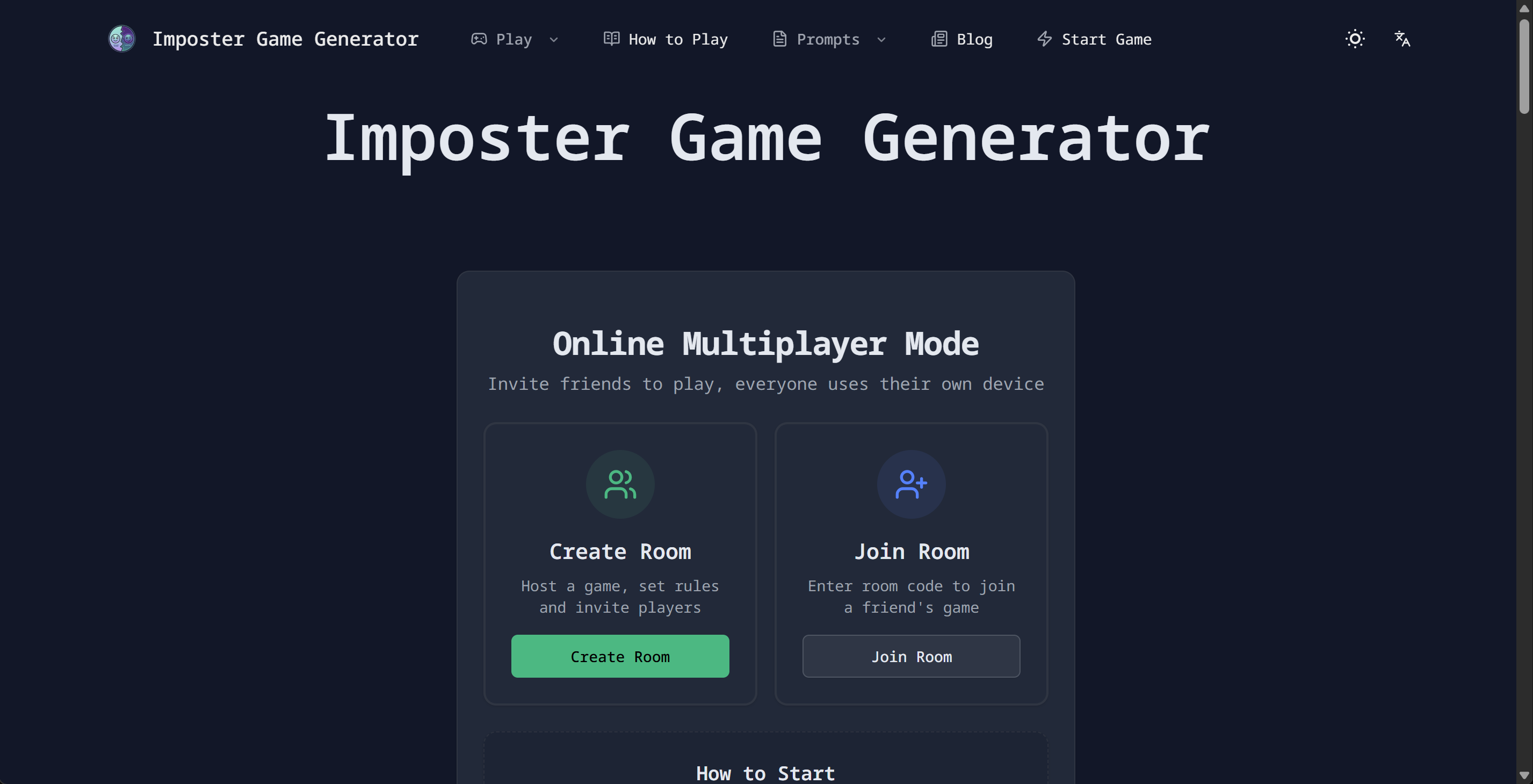
How Teachers Use Imposter Games in Classrooms
Keeping every student engaged can be challenging, especially during icebreakers, group activities, or language lessons. Teachers are always looking for activities that are fun, educational, and easy to organize.
This is where Imposter Games can make a big difference.
What Is an Imposter Game?
An Imposter Game is a social deduction game. Most players receive the same or closely related secret word, while one player—the Imposter—receives a different word.
Players take turns describing their words, listen carefully to others, and then vote to identify the Imposter.
The rules are simple, but the game encourages communication, observation, and critical thinking.
👉 Try it for free: Imposter Game Generator
1. A Perfect Classroom Icebreaker
At the beginning of a new semester or when forming new groups, students may not know each other very well.
Imposter Games can:
- Break the ice quickly
- Help students feel comfortable speaking
- Reduce social anxiety
- Encourage everyone to participate
Because every player needs to contribute, even shy students often become more engaged.
The engagement boost is backed by real classroom data: according to Kahoot's 2025 educator survey, 60% of teachers now rank gamification as their number-one strategy for boosting student engagement.
2. Improving Communication Skills
During the game, students practice:
- Describing ideas clearly
- Choosing appropriate vocabulary
- Listening actively
- Expressing opinions confidently
For example:
Secret words:
- Apple
- Pear
Students cannot say the actual word directly. Instead, they might say:
- "It's a fruit."
- "It's usually sweet."
- "You can make juice from it."
These activities naturally improve language and communication skills.
3. Developing Critical Thinking
Imposter Games are much more than guessing games.
Students constantly ask themselves:
- Who is giving too much information?
- Who is being too vague?
- Who seems suspicious?
- Who might be hiding something?
This process develops:
- Observation skills
- Logical reasoning
- Information analysis
- Decision-making abilities
These are valuable skills both inside and outside the classroom.
4. Encouraging Teamwork
Although players eventually vote for the Imposter, the game is fundamentally a collaborative activity.
Students learn to:
- Listen to others
- Share ideas respectfully
- Consider different perspectives
- Solve problems together
The game helps create a more positive and interactive classroom environment.
There is solid research behind this effect. Google's Project Aristotle, a study of 180 of the company's own teams, found that psychological safety—the shared feeling that it is safe to speak up, ask questions, and make mistakes—is the single most important factor in effective teams. Low-stakes social deduction rounds help build exactly that kind of climate, where every student's voice matters.
5. Great for Language Learning
Many teachers use Imposter Games in:
- English classes
- Foreign language lessons
- Vocabulary reviews
- Speaking practice sessions
Teachers can also customize word categories.
Examples:
Animals
- Cat
- Tiger
Countries
- Japan
- Korea
Science
- Planet
- Star
Different themes allow the game to fit almost any subject.
Why Do Teachers Love Imposter Games?
Because they are:
✅ Easy to learn
✅ Fun and interactive
✅ Suitable for all students
✅ Great for communication practice
✅ Excellent for developing reasoning skills
✅ Simple to organize with no downloads required
Start Playing for Free
If you're looking for an activity that increases classroom participation and encourages communication, give Imposter Games a try.
Our online tool lets teachers create classroom-ready social deduction games in seconds.
👉 Create your classroom game now: Imposter Game Generator