Party Games for Large Groups: Keeping 8+ People Entertained
Big group, one phone, zero prep. How to run party games for 8 or more people — formats, rotations, and scoring that keep everyone in the room involved.
 Admin
Admin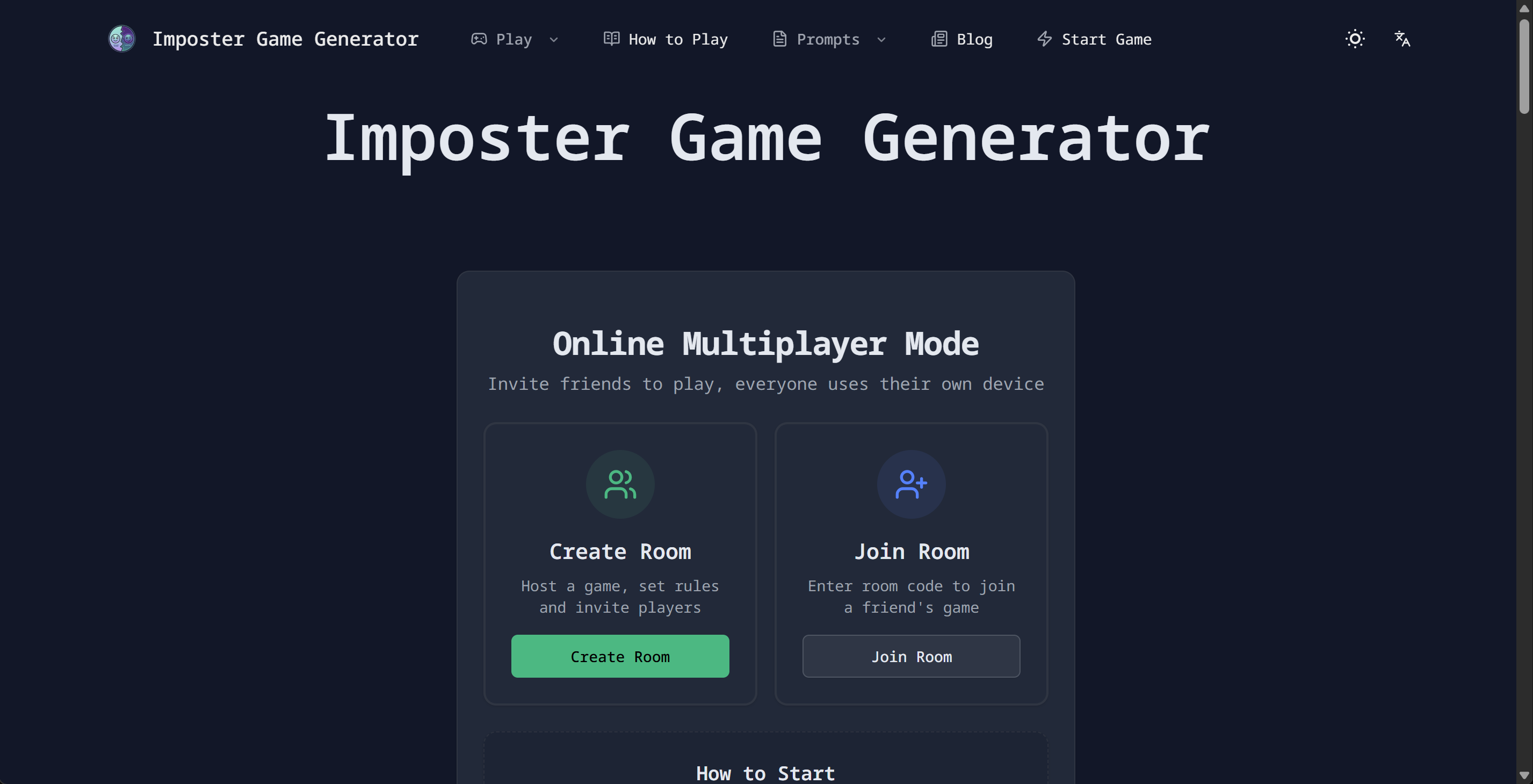
Party Games for Large Groups: Keeping 8+ People Entertained
Eight people. Twelve. Twenty. Somewhere between "cozy dinner" and "full-blown party," most games quietly fall apart. The box says 4–8 players, the turn order takes longer than the turns, and by round three, half the room is on their phones.
Big groups don't need more games — they need the right games, run the right way. This guide covers what actually breaks at scale, how to pick formats that survive it, and the rotations and scoring systems that keep a crowded room loud until midnight.
What Actually Goes Wrong with Big Groups
Before picking anything, it helps to know the three failure modes that kill large-group games:
- Downtime between turns. With ten players and a slow format, you act for thirty seconds and then wait nine minutes. Waiting is where parties die.
- Quiet guests get edged out. Big groups always contain a shy guest, a tired guest, and a guest who arrived "just to say hi." Turn-based elimination games push all three to the couch.
- Rule complexity multiplies. A rule that takes one minute to explain to four people takes four minutes with twelve — and someone always asks again anyway.
Every fix below attacks one of these three problems directly.
Three Rules for Picking a Big-Group Game
When you're choosing what to play with a crowd, screen candidates against these:
- Everyone plays on every turn. Simultaneous guessing, group discussion, or team formats beat strict turn order. If a player can be idle for five minutes, the game doesn't scale.
- The rules fit in thirty seconds. If you can't explain it before people finish their drinks, park it. Party games live or die on the first round, and the first round lives or dies on the explanation.
- Spectators can jump in. The best big-group games let someone wander over from the kitchen and join the very next round, no catch-up required.
The Imposter Game at Big Tables
The classic social deduction format is built for exactly this. In the imposter game, everyone gets a secret word on the same theme — except one player, who gets either nothing or a fake. One clue each, one vote, one reveal. With a large group you can turn it up:
- Runs 3 to 20 players. Yes, twenty. A twenty-person circle sounds chaotic, but one-clue-per-player rounds move fast because everyone is invested in every single clue.
- Add a second or third imposter. With eight or more players, a single hidden player is too easy to corner. Running two or three imposters splits the room into factions — each imposter tries to blend in while quietly voting the other imposter under the bus.
- 244 words in the deck. Enough that a weekly game night burns through dozens of rounds without repeats, across categories from food and animals to sports and movies.
- No accounts, no apps, no cost. One phone gets passed around the circle; each player peeks at their card privately and passes it on. Free, instant, and the host does zero prep.
The format has real history behind it, too: social deduction began in 1986, when Moscow State University psychology student Dmitry Davidoff invented Mafia — the game that, according to Wikipedia, started the entire hidden-role genre.
The reason this format scales so well is structural: the "action" is a group conversation, not a turn queue. Ten people debating ten clues is ten people busy at once.
And the scale is not hypothetical: at its peak in November 2020, the social deduction hit Among Us was drawing roughly 500 million monthly players, according to Business of Apps. Big-circle guessing games are a mainstream pastime now — not a niche party trick.
👉 Play the imposter game — set the player count, pick your imposter count, and pass the phone.
For word strategy at a big table — how to give a clue that's safe for you but useless to the imposter — the imposter word game guide breaks it down clue by clue.
Charades Rounds for Split Squads
When the crowd is too big for one circle, split it and run timed charades. The online generator format is ideal for large groups because it converts a single performance into a team sport:
- 25 cards per round. Every generated round deals a full stack, so a big team can keep guessing without a refill.
- Timers from 30 to 120 seconds. Short timers for rowdy crowds, long ones for harder difficulty packs. Crank the difficulty when the room gets cocky.
- Six themes out of the box, plus two unlockable packs. Movies, animals, food, and an adults-only theme when the night calls for it — let the room vote.
- Three difficulty levels. Mix kids and grandparents on easy; save hard for the veterans.
The big-group format that works best: two teams, one phone, alternating rounds. Team A's actor takes the device for a 60-second round while Team B watches and guards against cheating; then swap. Total the scores across rounds on a whiteboard or a napkin. Because every correct guess scores for the whole team, the quiet guest who shouts one answer contributes as much as the loudest actor.
👉 Start a round: charades game online
Rotation and Scoring That Keep Everyone In
Two cheap tricks that make any of the above run smoother with a crowd:
Rotate the phone-holder on a schedule. Instead of one host running everything all night, appoint a new "table captain" every two rounds. They read the device, referee the vote, and pass the job on. This does three things: spreads the spotlight, keeps the host sane, and gives structured roles to guests who'd rather run things than perform.
Keep a visible scoreboard. A running tally on a whiteboard, a mirror, or just a notes app cast to the TV changes the psychology of a big group entirely. People who drift toward the snacks drift back when their team is down by two. Award points shamelessly — for wins, for funniest clue, for most wrong accusations — so there are many ways to appear on the board.
Room, Table, and Tempo
Physical setup matters more with twelve people than with four:
- Living room circles suit the imposter game: everyone needs to hear every clue and see every face during the vote. Pull chairs into a closed loop, not a horseshoe — the two ends of a horseshoe never hear each other.
- Long tables suit team charades: one end becomes the stage, teams sit on opposite sides, and the phone sits where the actor can see it and the audience can't.
- Outdoors works fine — that's the whole point of phone-based games. No board to blow away, no pieces to lose in the grass. Just mind the screen glare.
Then pace the night in three phases: a couple of light warm-up rounds while people arrive, the main competitive block in the middle, and short low-stakes rounds at the end when people start leaving — latecomers and early-leavers both get a game without breaking one.
For more on structuring the full evening — snacks, phases, table splits — see board games for game night, and for grown-up-only crowds, fun games with adults has the settings that keep the room honest.
Frequently Asked Questions
How many people is too many for one game? The imposter game caps at 20 players, and honestly that's about the ceiling for any single-circle party game. Past that, split into two tables and run parallel games — then bring the winners together for a final.
What if half the group has never met the other half? Even better. Social deduction games are famous icebreakers precisely because you're forced to study strangers' faces and argue with them within minutes of meeting.
Do we need one phone per person? No. One phone for the whole room is the standard setup — the device gets passed hand to hand. A second device is only useful for running two parallel tables.
Can kids and adults play together? Yes. Keep the imposter game on friendlier word categories, or run charades on easy difficulty. The mechanics don't change; only the word packs do.
One Phone, Twenty People, Zero Prep
Big groups don't ruin games — the wrong format does. Pick games where the whole room plays every turn, explain them in thirty seconds, keep the scoreboard visible, and rotate who runs the phone.
👉 Start with the crowd-pleaser: play the imposter game
Set the player count to your headcount, choose your number of imposters, and pass the phone clockwise. The arguing will handle itself.